Twante residents fight to close foul-smelling fertilizer factory 

People living near the plant say that the smell emanating from it is unbearable  

Published on Jan 8, 2021
Local people hold up signs expressing their opposition to a fertilizer factory at a meeting held on December 29. (K Zun Nway / Myanmar Now)

Residents of two villages in Yangon region’s Twante township met with representatives of a nearby fertilizer factory and government officials last week to demand the closure of the foul-smelling plant.

The meeting took place on December 29, but ended without reaching a solution to the problem. The village residents said they would take the matter to the regional government as their next step.

The Shwe Nagar fertilizer factory has been opposed by people living in the nearby villages of Kan Pat Yoe and Htan Ta Pin since it was opened on the Twante-Maubin road in mid-2019.
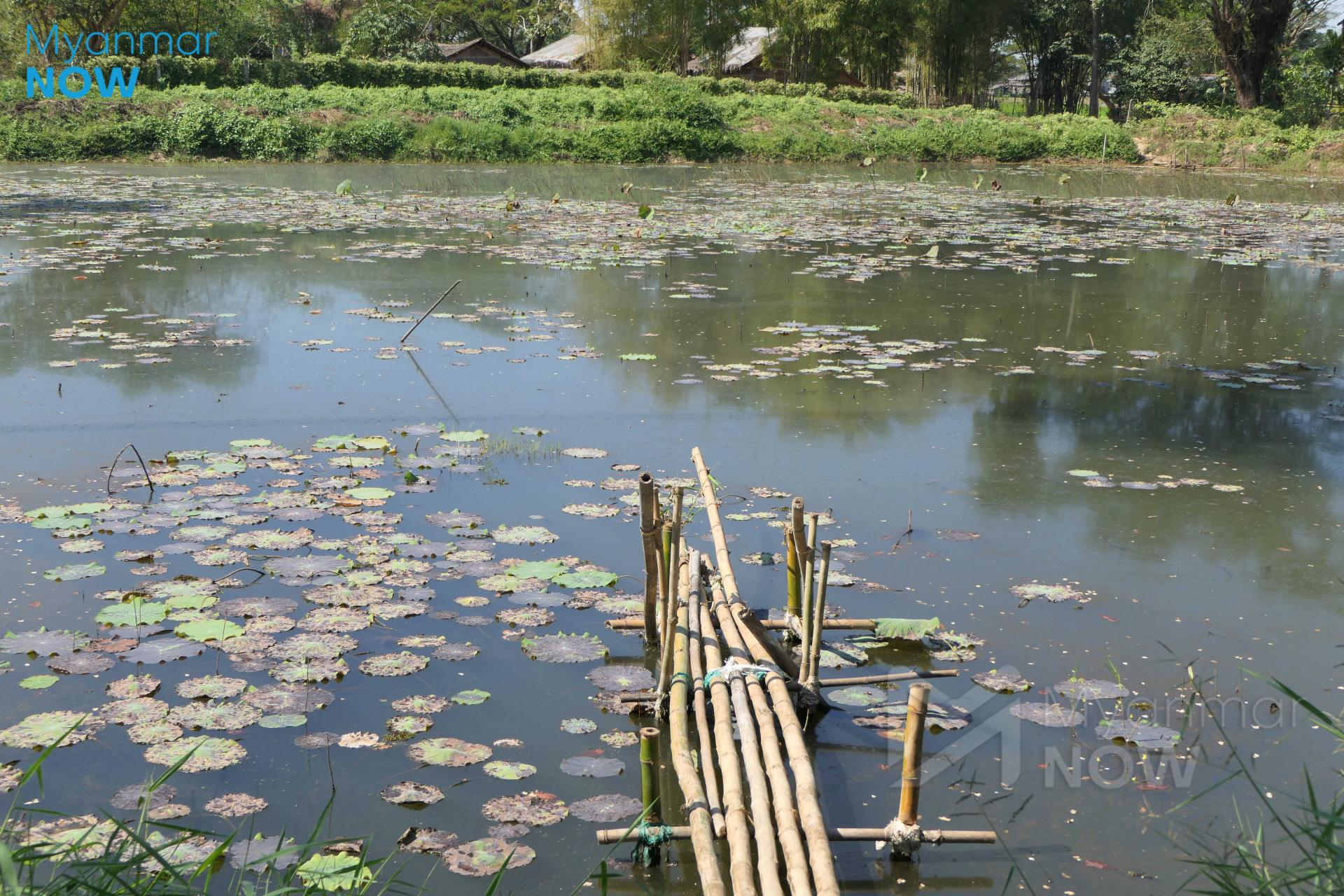


During the two-hour meeting, which took place at a monastery in Kan Pat Yoe, the villagers complained that the factory wasn’t just fouling the air, but also polluting the water.

They said they had reported to various government departments that effluent from the factory was killing fish in a nearby stream and changing the colour of a lake in Kan Pat Yoe.


“More than 200 households from two villages are opposed to the factory. We have over 200 signatures,” Ye Win Htut, a resident of Kan Pat Yoe, told Myanmar Now. 

“We’ll be sending official letters to different ministries and departments to show our opposition to this factory,” he added.

Kan Pat Yoe has around 300 households and Htan Ta Pin about half that number.

At last week’s meeting, local residents asked the factory to suspend its operations until it could install a biofilter system to control the odour. However, the factory continued to operate as usual.

“In studies, there’s no mention of the smell of amino acids having harmful effects, but of course there are some effects after a certain period,” said Aung Thin, a consultant for the Shwe Ngar fertilizer factory 

Local resident Tin Ohn, 71, complained that the smell from the factory made her dizzy and short of breath. “The stench is very foul. It immediately gives me a headache every time the factory is operating,” she said.

The odour comes from amino acids mixed with other chemicals to produce the fertilizers, explained Shwe Ngar agricultural consultant Aung Thin.

“In studies, there’s no mention of the smell of amino acids having harmful effects, but of course there are some effects after a certain period,” he said.

Officials at the factory said that experts who were supposed to come from China to set up a filtration system to remove the bad odour were unable to do so due to Covid-19 restrictions.  Instead, they said, a local company would do the job.

In the meantime, the factory will refrain from using amino acids in the production process, according to the company’s human resources officer, Naing Lin.

“They said it wouldn’t harm the environment or the birds, and that it wouldn’t produce bad water. They also said there wouldn’t be any noise or foul smell,” said local resident Than Naing Htwe

The factory, which is built on a 27-acre plot of land owned by the Directorate of Water Resources and Improvement of River Systems, produces fertilizers under the brands Pa Lel Thar, Pin Tat and Top One.

In November 2019, the Agriculture Ministry banned two fertilizers after 1,200 acres of farmland that used a Top One special fertilizer were found to be contaminated.

Because the lake in Kan Pat Yoe serves as the local water supply, residents say they have been reluctant to drink the water since it started to change colour about two months ago. Since then, they have relied on donated water, said Tin Ohn.

Aung Thin, the Shwe Nagar agricultural consultant, dismissed these concerns. 

“The discoloration is caused by fertilizer particles, which are not dangerous. They just think they’re dangerous,” he said, adding that tests by ISO-approved private labs and the township health department indicate the water is safe to drink.
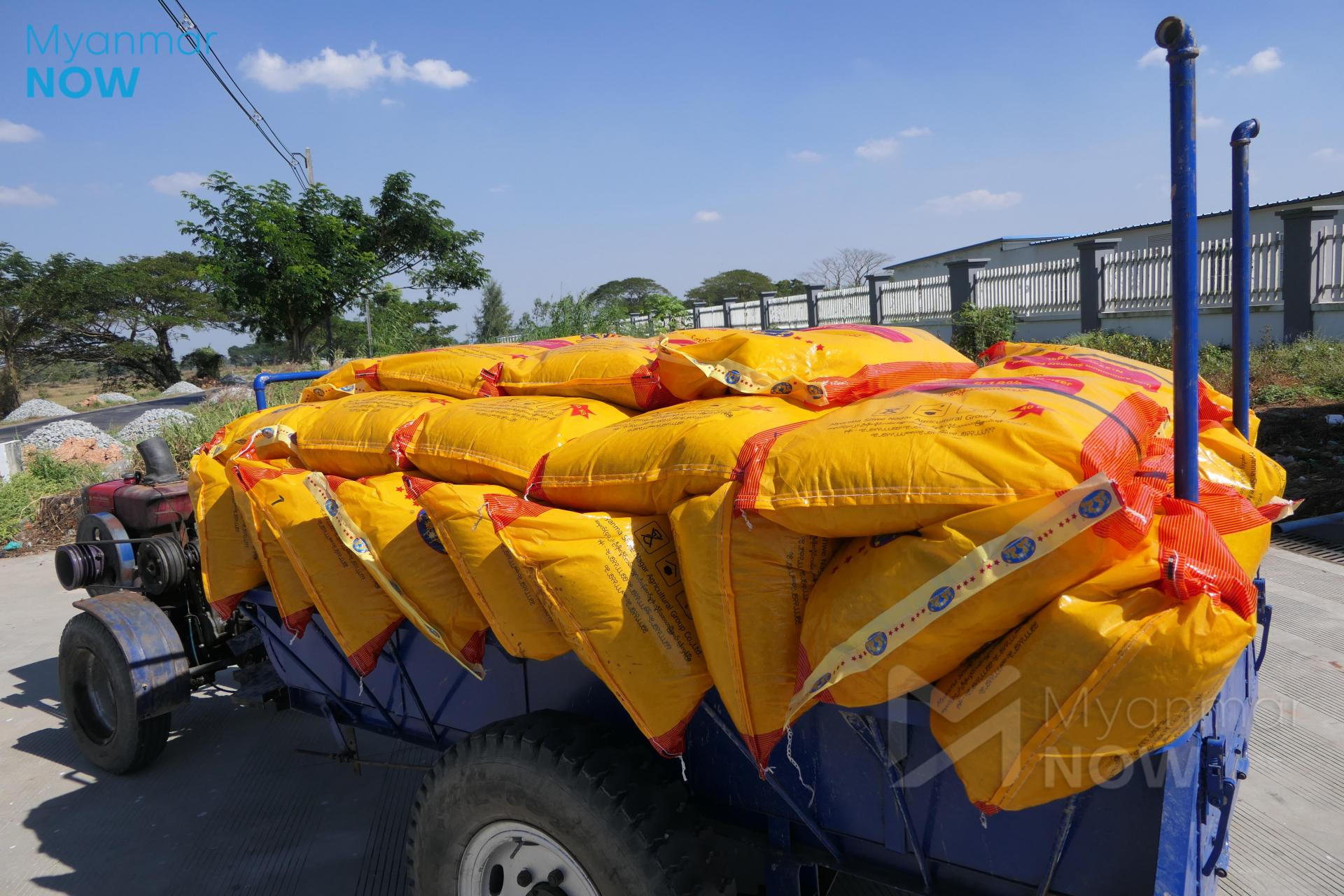
Another issue that local people have raised is that they were not properly informed when they agreed to allow construction of the factory. They say they were led to believe that it would only be used as a warehouse to store fertilizers.

“Wearing a mask protects you against Covid-19, but nothing can protect you from this stench,” said local resident Tin Ohn

Kan Pat Yoe native Than Naing Htwe, who was among those present when the company told locals about plans to build the facility, said there was never any mention of a factory.

“They said it wouldn’t harm the environment or the birds, and that it wouldn’t produce bad water. They also said there wouldn’t be any noise or foul smell,” he said, explaining why local people didn’t oppose the project at the time.

Factory officials say a third-party organization called HRD Environmental Training and Services was hired to conduct the environmental impact assessment (EIA).

However, an official from HRD told Myanmar Now that the assessment was done only for a warehouse, not a factory.

“The EIA was set up to assess how a warehouse would affect the environment in the region. That was the extent of our involvement,” the official said.

According to Naing Win Swe, the deputy general administrator for Twante township, concerns about the factory can be reported to the district and regional governments, which will then conduct on-site investigations.

Meanwhile, local people will have to continue to live with the smell.

“Wearing a mask protects you against Covid-19, but nothing can protect you from this stench,” said Tin Ohn.

Hayman Pyae is Reporter with Myanmar Now.

Those arrested include a BBC reporter and a former Mizzima correspondent. 

Published on Mar 19, 2021
Photojournalists take cover near the entrance of a monastery where military supporters gathered to attack protesters and media in Yangon on February 18 (EPA-EFE/LYNN BO BO)

A BBC journalist and a former Mizzima News reporter were arrested by the junta’s armed forces in Naypyitaw on Friday afternoon, a family member confirmed.

BBC Burmese journalist Aung Thura was in front of the Dekkhina District court to report on a hearing for National League for Democracy patron Win Htein when he was arrested. Former Mizzima correspondent Than Htike Aung was with him at the time of the arrest.

No further details of the arrest or the reporters’ detention were known at the time of reporting, according to Aung Thura’s relative. 

“I saw some plainclothes officers dragging away a person in trousers into a car,” lawyer Min Min Soe, who was near the court at the time, told Myanmar Now. The man she saw is believed to be Than Htike Aung.  

“Two other officers in plainclothes were hassling another individual in a paso [traditional sarong for men] and glasses,” she said, referring to Aung Thura. “It was quite a scene so I don’t know what happened next.”

As of March 16, a total of 38 journalists had been arrested or targeted for arrest since the February 1 coup. The latest arrests of the BBC and former Mizzima journalists push this number up to 40.  

Only 22 of these reporters have been released. Ten journalists have been charged with violating Section 505(a) of the penal code, which has been used against people who are seen as causing fear, spreading fake news, or agitating government employees. Under recent amendments to the law, the charges come with a three-year prison sentence if convicted.

Online news website The Irrawaddy has also been charged by the junta as violating the same statute for showing “disregard” for the armed forces in their reporting of the ongoing anti-regime protests.

Five publications, including Myanmar Now and Mizzima had their offices raided and their publishing licenses revoked earlier this month by the regime.


Myanmar Now is an independent news service providing free, accurate and unbiased news to the people of Myanmar in Burmese and English.

Continue Reading

The offensives come in the wake of deadly crackdowns against anti-coup protesters in Myitkyina 

Published on Mar 18, 2021
A KIA soldier watches from an outpost in Kachin state in this undated file photo (Kachinwave) 

The Kachin Independence Army (KIA) launched attacks against police bases in the jade mining region of Hpakant on Thursday morning, a local resident told Myanmar Now. 

The attacks targeted police battalions where soldiers were stationed near Nam Maw village in the Seik Muu village tract.

“There are Myanmar police battalions around Nam Maw,” a resident said. At least three bases were attacked, he added. 

A 41-year-old civilian in Seik Muu village injured his left hand during the clash, the Kachin-based Myitkyina News Journal reported.

The KIA has launched several offensives against the coup regime’s forces recently. Fighting has also been reported in Mogaung and Injangyang this month. 

Some 200 people fled the Injangyang villages of Gway Htaung and Tan Baung Yan on Monday after the KIA launched an offensive against the military there. 

The offenses began in the wake of deadly crackdowns against anti-coup protesters in Myitkyina. The KIA has warned the junta not to harm anti-coup protesters. 


Myanmar Now is an independent news service providing free, accurate and unbiased news to the people of Myanmar in Burmese and English.

Continue Reading

The coup regime’s forces took the injured people away and locals do not know their whereabouts 

Published on Mar 18, 2021
Kalay residents move the body of a man who was shot dead on Wednesday (Supplied) 

Four young men were killed and five people were injured in the town of Kalay in Sagaing region on Wednesday as protesters continued their fight to topple the regime despite daily massacres across the country aimed at terrorizing them into submission. 

The Tahan Protest Group gathered in the town at around 10am and police and soldiers began shooting. One young man was shot dead on the spot as he tried to help people who were trapped amid gunfire, residents told Myanmar Now.   

The regime’s forces also shot at and chased fleeing protesters along roads and through narrow alleys, a resident said.

“The crowd of protesters dispersed but one person was shot dead while trying to rescue those trapped in the protest site,” the resident added. 

As the crowd dispersed, a man riding a motorcycle was shot outside a branch of KBZ Bank. “He also died,” the resident said. 

Despite the murders, protesters gathered again in the afternoon around 4pm. Police and soldiers started shooting again and killed two people. 

“They were shot dead while trying to set up barricades at the protest site. They were shot while trying to obstruct the army’s way as the army troops chased and shot the trapped protestors,” the resident said. 

The two who were killed in the morning were identified as Salai Kyong Lian Kye O, who was 25, and Kyin Khant Man, who was 27 and had three children. The identities of the other two have not yet been confirmed.

Five people were also injured and then taken away. Locals said they did not know where they had been taken.   


Myanmar Now is an independent news service providing free, accurate and unbiased news to the people of Myanmar in Burmese and English.

Continue Reading