Tax break for lucrative mine may cost Myanmar $163m while companies reap huge profits

Seven-year tax holiday is meant to encourage investment, but a mining consortium already stands to make enormous amounts without the incentive

Published on Feb 14, 2020
The Bawdwin mine in northern Shan State's Namtu township contains rich deposits of silver, lead, zinc and copper and is among the most lucrative in Myanmar. (Photo: Kan Thar/ RFA)

Myanmar is set to lose out on hundreds of billions of kyat to an Australian-led mining consortium under a tax relief scheme - even though the project in Shan State is expected to be hugely profitable.

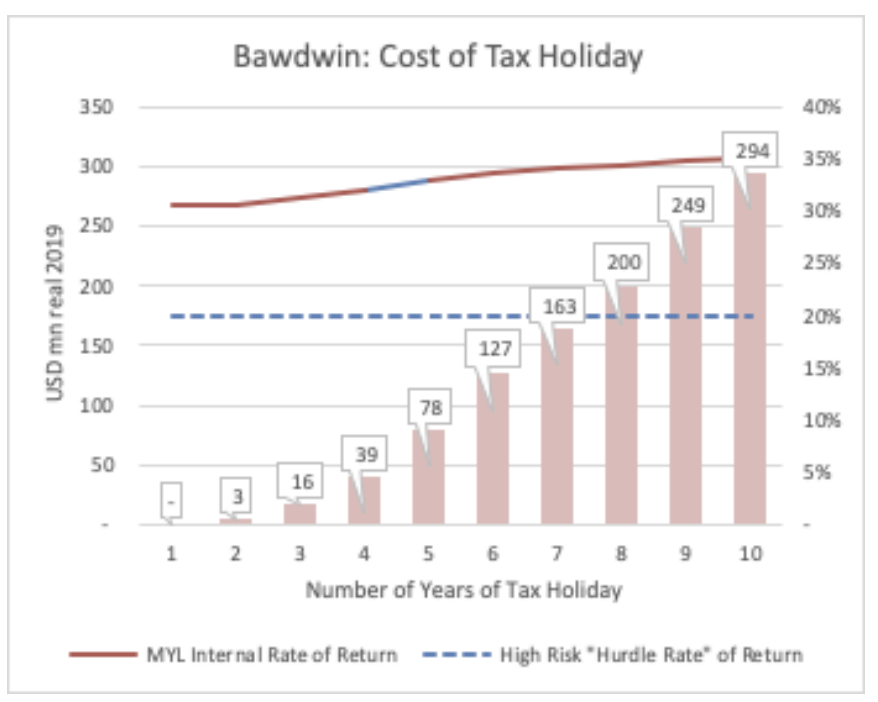
A consortium that includes Perth-based Myanmar Metals, which has a 51% stake in Bawdwin mine, is planning to apply for a tax holiday that could save it an estimated 237.5 billion kyat - or roughly $163m.

That is enough to pay for more than 109,000 primary school teachers' salaries for a year.

The mine will be one of the world’s top producers of silver and lead, generating Myanmar Metals and its partners, Win Myint Mo Industries and East Asia Power enormous wealth.

Myanmar Metals argues the incentive is needed because the conflict-torn state is a risky investment. Not paying corporation tax for seven years will make it easier to improve the local economy, it says.

But a new report by Berlin-based OpenOil, a company which advises governments on mine and oil contracts, suggests the Bawdwin joint venture stands to make a massive profit on the venture even without a tax break.

“Bawdwin looks as though it would still be ‘investible’ without the tax break,” OpenOil’s director Johnny West told Myanmar Now.

“It looks clear from our analysis... that such an incentive wouldn’t play a significant role in determining the mine’s profitability,” he added.

Mae Buenaventura, senior policy officer at the Asian Peoples' Movement on Debt and Development, said: “Income tax holidays especially for large scale mining are a mere cash transfer by countries that are cash-strapped to begin with.

“They must be scrapped immediately as part of progressive tax reforms."

A decision on whether to grant Bawdwin the tax break is expected later this year.

It will be up to the Myanmar Investment Commission, which says the company still needs to apply for permission to develop the project.
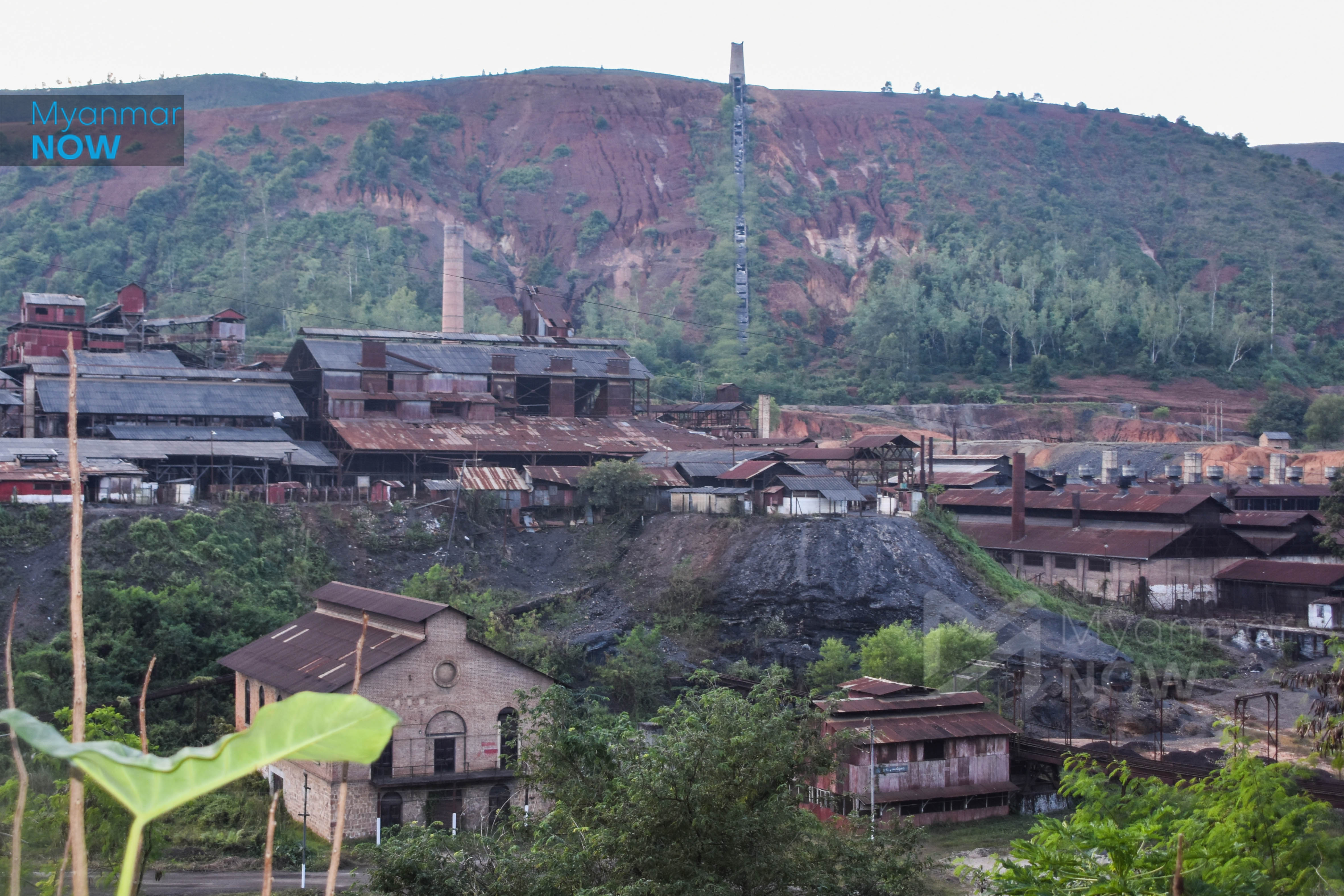
The Bawdwin mine area, seen in 2017. (Photo: Kan Thar/ RFA) 

Lucrative site

Bawdwin mine, which contains rich deposits of silver, lead, zinc and copper, is among the most lucrative in Myanmar. By 2023, it is expected to produce more in tax revenues than the country’s entire mining industry did in 2017.

OpenOil’s estimates are based on a pre-feasibility study of the mine and information published on Myanmar Metal’s website.

Myanmar Metals CEO John Lamb argued that the tax break is necessary.

“It’s a very, very difficult jurisdiction to gain investment in,” he told Myanmar Now.

Exploiting a “critical mineral asset in a remote and impoverished area” would benefit the local community and the country, he added.

“Local investment tends to have a higher impact per dollar spent, and tends to have a higher multiplier effect in the economy than money spent with big businesses in the major cities,” he said.
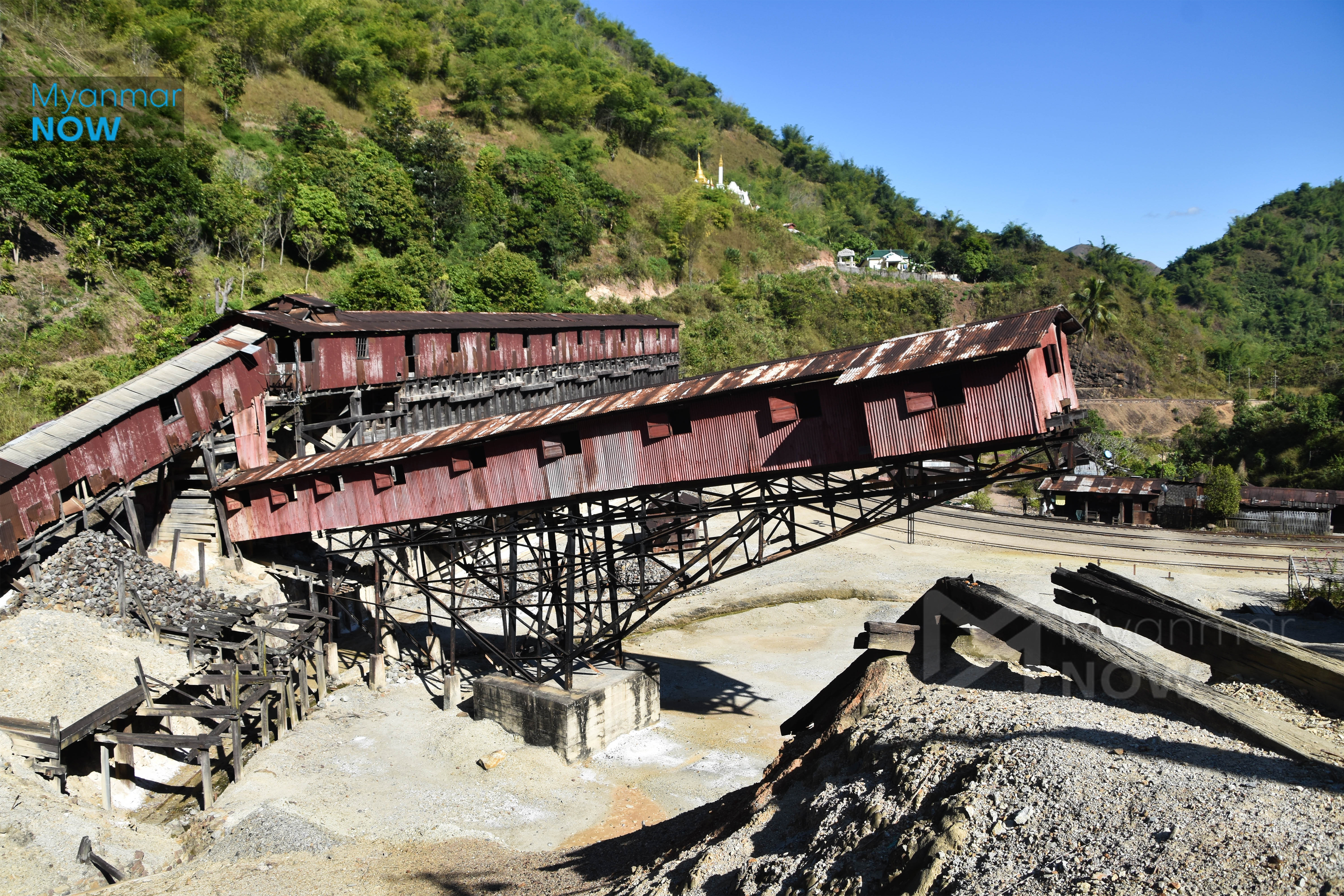
The Bawdwin mine area, seen in 2017. (Photo: Kan Thar/ RFA)

Aung Kyaw Moe, a Shan state-based member of the Myanmar Alliance for Transparency and Accountability, disagreed.

He said the region surrounding the mine is still at risk of conflict, and that the government must consider the mine’s impact on stability in the area.

“It is still too early to allow this mine,” he told Myanmar Now.

“The government should not grant them seven years of tax breaks while also giving them the country’s natural resources for all those years,” he added.

Tax holidays ‘inefficient and ineffective’

Tax holidays to incentivise investment from large companies are facing increased scrutiny around the world.

Many say these offers are too generous and cause countries to lose out on large sums of money that could be used to improve peoples’ lives.

A 2018 study by the Organisation for Economic Co-operation and Development (OECD) concluded that tax holidays are an “inefficient and ineffective incentive for mining” and said they can encourage abusive corporate behaviour.
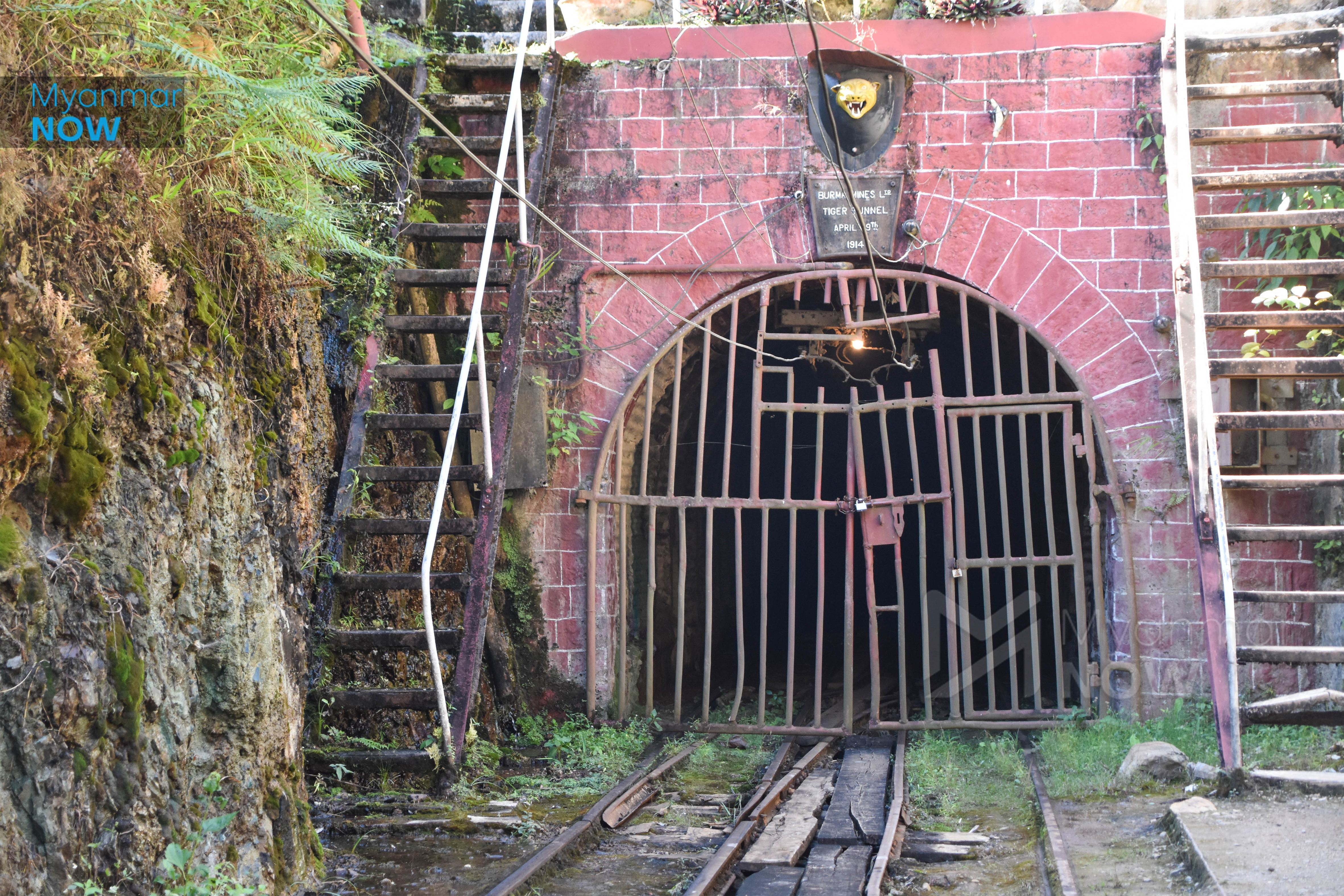
The Bawdwin mine area, seen in 2017. (Photo: Kan Thar/ RFA)

"Investors may increase their income during the tax-free period by speeding up the rate of production, and shifting the profits offshore,” the report said.

The New York-based Natural Resource Governance Institute (NRGI) shares this concern.

"In dealing with investments like Bawdwin and in seeking to attract further large mines in the future, the government must strike a balance between offering tax terms that are attractive to companies, while also optimizing revenue for the country,” it wrote in a 2019 policy briefing.

"Corporate income tax holidays are among the most dangerous and damaging of tax perks, and yet also the most common among Asian developing countries,” said Buenaventura. “In the case of mining projects [they] are redundant and wasteful because the investment is likely to have been made anyway without the incentive.”

Myanmar investment law allows the government to waive the country’s 25% corporate income tax on profits in certain cases for three, five or seven years.

Without a tax holiday, Myanmar Metals’ projected profit on the Bawdwin mine would still be high enough to justify its investment, according to OpenOil’s analysis.
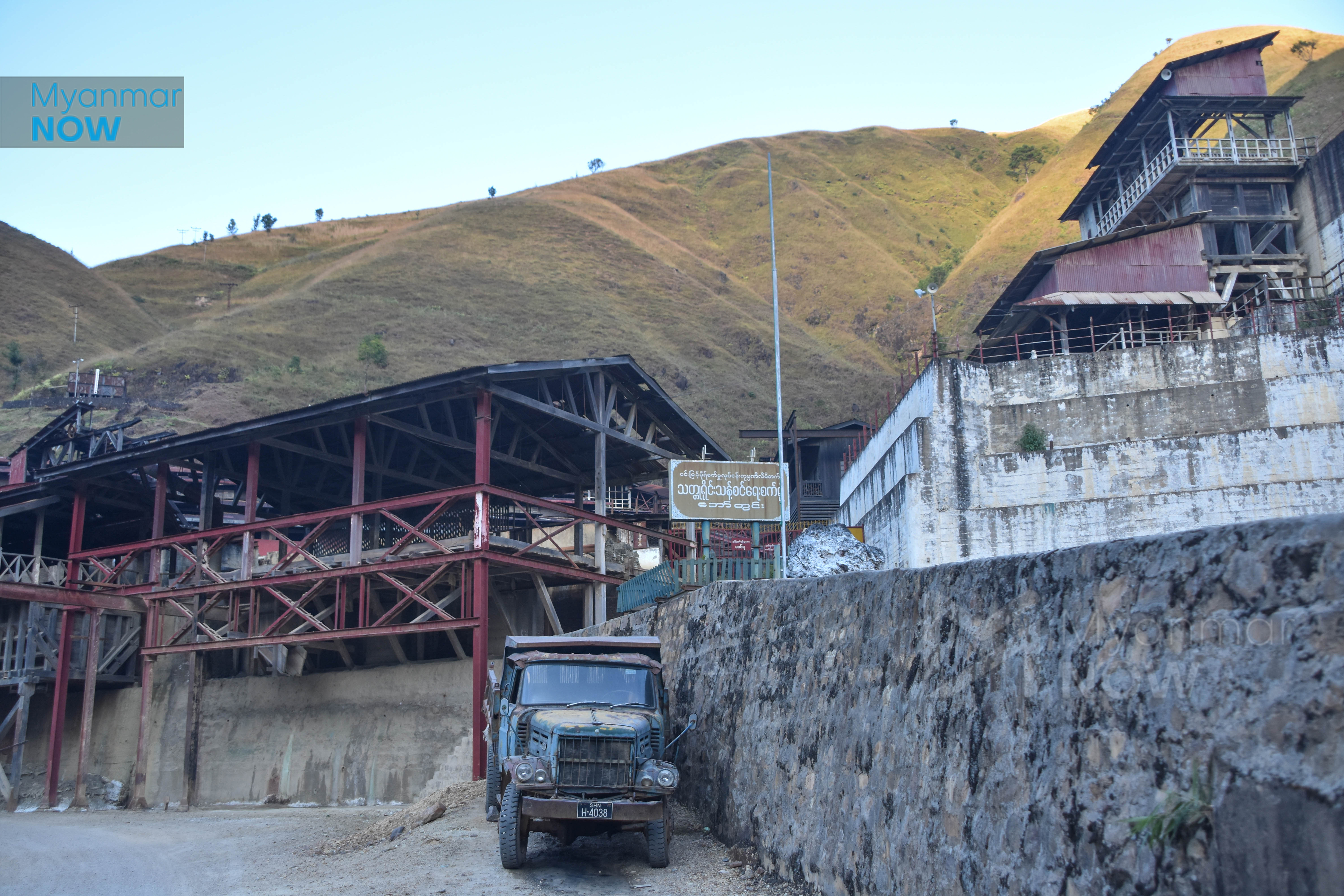
(Photo: Kan Thar/ RFA)


Investors would earn a 36% return with the tax holiday and over 30% without it. Both figures are well above the minimal rates investors usually accept for putting their money into such a project, according to OpenOil.

"Before deciding on whether or not to concede a tax incentive, it is important for any government to weigh both the cost of the incentive and the need for it,” said West.

“In the case of Bawdwin, it looks clear from our analysis—that follows the company’s own provisions—that such an incentive wouldn’t play a significant role in determining the mine’s profitability,” he added.

Myanmar Metals and Win Myint Mo Industries plan to negotiate a seven-year tax exemption with the government after submitting its final feasibility study in the first quarter of this year, according to company documents.

Production at the mine is expected to begin in approximately 12 months.
Secret agreements

NRGI found in a 2018 report that large mining companies investing in Myanmar had negotiated “bespoke” agreements that "deviate significantly from the standard terms" defined by the Ministry of Natural Resources and Environmental Conservation (MONREC).

“This creates risks,” the report said. “Negotiators may make unjustified and inconsistent concessions, which then must be rectified in subsequent renegotiations.”

As a result Myanmar risks losing out on significant tax revenues and creating an uncertain investment climate, it added: “Frequent changes to contracts deter investment and create opportunities for mistakes that can cost the country billions of kyat."

The government does not usually disclose the terms of bespoke tax breaks, making it hard to know whether the public is getting a good deal.

Bawdwin mine contains enormous quantities of lead, copper and zinc and has the potential to dwarf the tax revenues of Myanmar’s entire mining industry.

Without the tax break, the government stands to make up to $1.87bn in the next 13 years from the mine, according to OpenOil’s analysis, though revenue levels depend on how the global market for these metals perform over time.

Even if it grants the tax holiday, the government will receive $112 million a year by 2023 in fees, charges, royalties and profits from a state-owned firm with a stake in the mine, according to OpenOil. That would be 40% more than the entire mining industry contributed in 2017. Myanmar Metals is projecting it will make a profit of $580m during the 13-year “starter pit” phase.

Bawdwin mine, once called the richest in the British Empire, attracted the attention of Myanmar Metals in 2017.

Formerly known as Top End Minerals, the company paid Myanmar’s Win Myint Mo Industries (WMM) — whose parent company National Infrastructure Holdings Co has held concessions since 2009 — a $1.5m deposit for the option to acquire an interest in the project in 2017.

It later exercised the option and acquired a 51% participating interest in the project, forming the Bawdwin Joint Venture consortium with WMM and another firm called East Asia Power.

There are no public details on how the revenues will be divided between the partners.

Kyaw Se, a director at Win Myint Mo Industries said the consortium “will only apply for a tax exemption in line with the investment law. We will request no special privileges.”

Reporting by Chan Thar, Nick Mathiason and Tin Htet Paing

Editing by Joshua Carroll and Danny Fenster

Photos by Kan Thar/ RFA

Finance Uncovered, a UK-based investigative journalism training and reporting organisation, contributed to this story.


Myanmar Now is an independent news service providing free, accurate and unbiased news to the people of Myanmar in Burmese and English.

The offensives come in the wake of deadly crackdowns against anti-coup protesters in Myitkyina 

Published on Mar 18, 2021
A KIA soldier watches from an outpost in Kachin state in this undated file photo (Kachinwave) 

The Kachin Independence Army (KIA) launched attacks against police bases in the jade mining region of Hpakant on Thursday morning, a local resident told Myanmar Now. 

The attacks targeted police battalions where soldiers were stationed near Nam Maw village in the Seik Muu village tract.

“There are Myanmar police battalions around Nam Maw,” a resident said. At least three bases were attacked, he added. 

A 41-year-old civilian in Seik Muu village injured his left hand during the clash, the Kachin-based Myitkyina News Journal reported.

The KIA has launched several offensives against the coup regime’s forces recently. Fighting has also been reported in Mogaung and Injangyang this month. 

Some 200 people fled the Injangyang villages of Gway Htaung and Tan Baung Yan on Monday after the KIA launched an offensive against the military there. 

The offenses began in the wake of deadly crackdowns against anti-coup protesters in Myitkyina. The KIA has warned the junta not to harm anti-coup protesters. 


Myanmar Now is an independent news service providing free, accurate and unbiased news to the people of Myanmar in Burmese and English.

Continue Reading

The coup regime’s forces took the injured people away and locals do not know their whereabouts 

Published on Mar 18, 2021
Kalay residents move the body of a man who was shot dead on Wednesday (Supplied) 

Four young men were killed and five people were injured in the town of Kalay in Sagaing region on Wednesday as protesters continued their fight to topple the regime despite daily massacres across the country aimed at terrorizing them into submission. 

The Tahan Protest Group gathered in the town at around 10am and police and soldiers began shooting. One young man was shot dead on the spot as he tried to help people who were trapped amid gunfire, residents told Myanmar Now.   

The regime’s forces also shot at and chased fleeing protesters along roads and through narrow alleys, a resident said.

“The crowd of protesters dispersed but one person was shot dead while trying to rescue those trapped in the protest site,” the resident added. 

As the crowd dispersed, a man riding a motorcycle was shot outside a branch of KBZ Bank. “He also died,” the resident said. 

Despite the murders, protesters gathered again in the afternoon around 4pm. Police and soldiers started shooting again and killed two people. 

“They were shot dead while trying to set up barricades at the protest site. They were shot while trying to obstruct the army’s way as the army troops chased and shot the trapped protestors,” the resident said. 

The two who were killed in the morning were identified as Salai Kyong Lian Kye O, who was 25, and Kyin Khant Man, who was 27 and had three children. The identities of the other two have not yet been confirmed.

Five people were also injured and then taken away. Locals said they did not know where they had been taken.   


Myanmar Now is an independent news service providing free, accurate and unbiased news to the people of Myanmar in Burmese and English.

Continue Reading

An ex-convict businessman says that he gave the State Counsellor more than $550,000 in cash when ‘there was no one around.’ 

Published on Mar 18, 2021
Maung Weik (first from left) is pictured near State Counsellor Aung San Suu Kyi at the opening ceremony of a government housing built by his Say Paing Company. (Maung Weik/ Facebook)

The military council announced on March 17 that it would attempt to charge State Counsellor Daw Aung San Suu Kyi, who has been detained since Myanmar’s February 1 coup, with corruption.

The junta’s move is linked to new allegations against Aung San Suu Kyi by businessman Maung Weik. The owner of the Say Paing construction and development company, Maung Weik was formerly imprisoned on drug charges and is known to have close relationships with members of the military’s inner circle.  

Military-run media aired a recorded statement made by Maung Weik alleging that he had given Aung San Suu Kyi more than US$550,000 in cash-filled envelopes on the four occasions he met her between 2018 and 2020. 

“There was no one around when I gave her the money,” he said in the video statement. 

Under Myanmar’s earlier military regime, Maung Weik maintained ties to several generals, including former intelligence chief Khin Nyunt.

He was sentenced to 15 years in prison on drug charges in 2008, but was released in 2014 while the country was led by the military-backed Union Solidarity and Development Party.  

Upon his release, Maung Weik founded Say Paing–a construction company–and ran various business ventures through his connections to military officials.  

Maung Weik’s wife is also the niece of military-appointed Vice President Myint Swe, who was also the former chief minister of Yangon under the former military administration. 

The coup council announced on March 11 that the now-ousted National League for Democracy’s (NLD) Yangon Region chief minister Phyo Min Thein had given Aung San Suu Kyi $600,000 and more than 11 kilograms of gold. The announcement provided no reason as to why the money and gold were allegedly given to the State Counsellor by the chief minister. 

A top NLD figure told Myanmar Now that the funds in question were donations to build a pagoda. 

“They’re trying to fabricate this and ruin [Aung San Suu Kyi’s] reputation, but the public already clearly knows it’s not true. There’s no need to say anything else,” the official said. 

The junta has also accused the Daw Khin Kyi Foundation and an affiliated project, the La Yaung Taw Academy, of losing public funds. The foundation was founded by Aung San Suu Kyi and named after her late mother. 

According to the military council, the land lease for the Daw Khin Kyi Foundation’s headquarters, located on Yangon’s University Avenue, is not commensurate with the market price for land in the area. It argues that the country had lost more than 1 billion kyat (more than $700,000) in public funds as a result.

The junta declared that from 2013 to 2021, more than $7.9 million in donations from foreign NGOs, INGOs, companies and individual international donors flowed into the foundation’s three foreign currency accounts.

Also under investigation by the junta is the La Yaung Taw Academy in Naypyitaw, which trains young people in environmental conservation and horticulture in association with the Daw Khin Kyi Foundation. The military said the rate at which the land for the project was purchased came at a discount of at least 18 billion kyat (more than $12.7 million), which was subsequently a loss to the state. 

It also reportedly included some plans—such as the construction of a museum—that used funds in a way that strayed from the project’s, and the Daw Khin Kyi Foundation’s, original aims.

“The construction of a building with finance from the foundation for the chair of the foundation has deviated from the foundation’s objective,” the March 17 announcement in the military-run newspaper said. 

Prior to the corruption allegations, the military council had hit Aung San Suu Kyi with four charges at the Zabuthiri Township court in Naypyitaw.

She has been accused of violating Section 505(b) of the Penal Code for incitement, which carries a sentence of two years in prison; Article 67 of the communications law for possession of unauthorized items; an import-export charge for owning walkie-talkie devices; and a charge under the Natural Disaster Management Law for not following Covid-19 measures during the 2020 election campaign period.

The military council has not allowed Aung San Suu Kyi to meet with her legal team. 

“I’ll most likely see her via video conferencing on March 24 for the next hearing,” lawyer Min Min Soe told Myanmar Now. 

The military council has only allowed lawyers Yu Ya Chit and Min Min Soe to take on Aung San Suu Kyi’s case, ignoring the requests of more established legal experts, including Khin Maung Zaw and Kyi Win, to be granted power of attorney.


Myanmar Now is an independent news service providing free, accurate and unbiased news to the people of Myanmar in Burmese and English.

Continue Reading