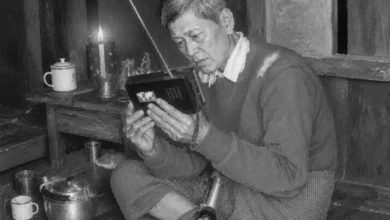
Dr Wunna is terrified of infecting his frail mother with the novel coronavirus.
The 33-year-old assistant surgeon, who works at Yangon General Hospital’s emergency department, would like to move out until it’s safe to see her again.
But he comes home after every shift because she has coronary heart disease, and he doesn’t want her to be alone if she has a heart attack. That same disease, though, is the very thing that makes her so vulnerable if she catches the virus.
Knowing that his job puts him at a higher risk of getting the virus, and that he might spread it to his mother even if he doesn’t have symptoms, is causing him constant stress.
“It’s suffocating,” he told Myanmar Now at the end of a busy shift. “How long is this going to last?”
When he gets home from work each day he takes his shoes off outside, disinfects them and leaves them there. Then he immediately washes all of his clothes. He keeps as much distance as possible from his mother in their shared apartment and they no longer eat at the same table.
Dr Wunna is among hundreds of frontline health workers in hospitals dealing with Covid-19 patients whose family lives have been upended since the crisis began.
Many have left their homes to stay in government-provided apartments, and haven’t seen their partners, children and parents for weeks for fear of giving them the virus.
So far, a doctor, an anaesthetist, and three nurses at public hospitals have tested positive for the virus in Myanmar. More than 100 other public healthcare workers who were in close contact with them are still under quarantine.
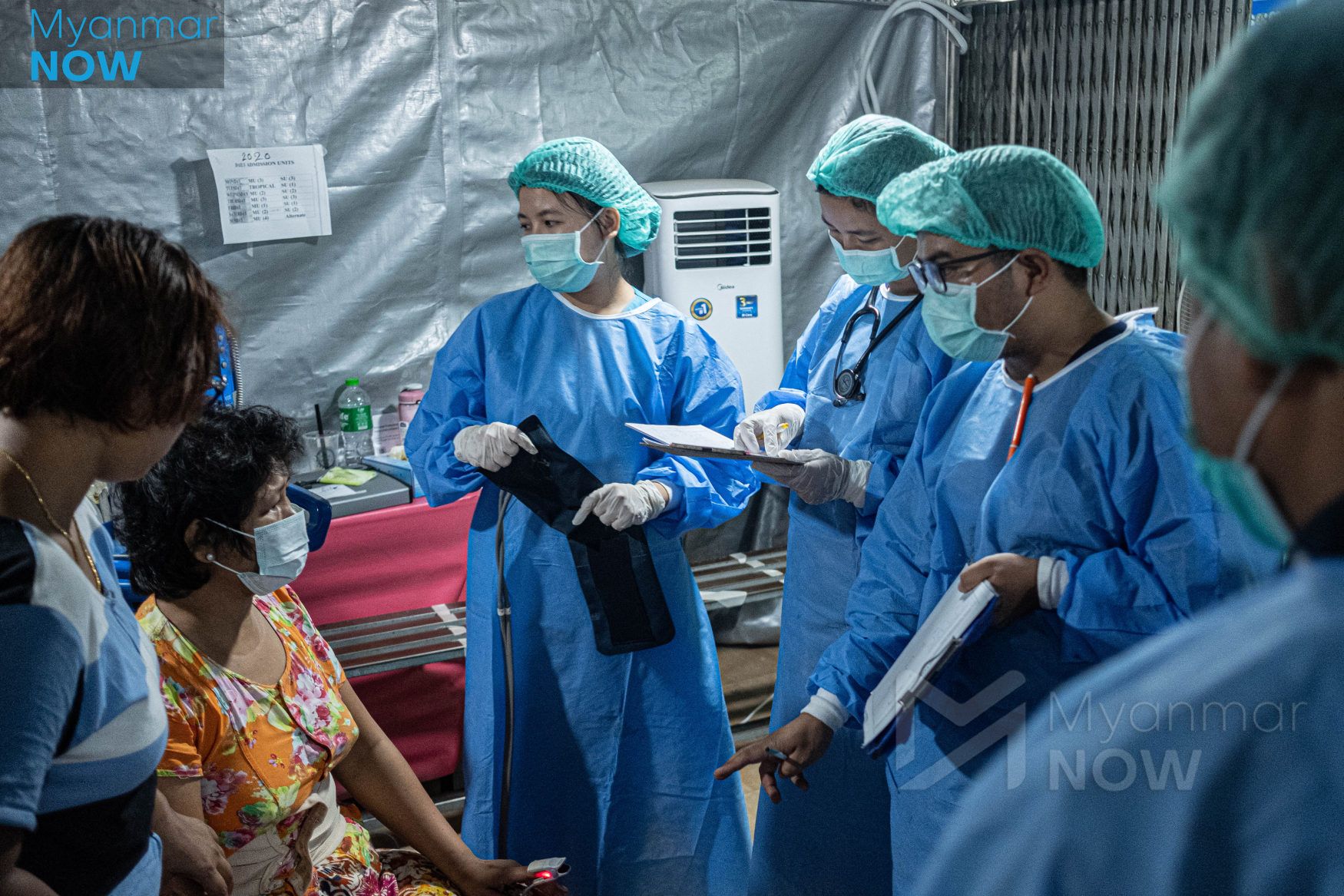
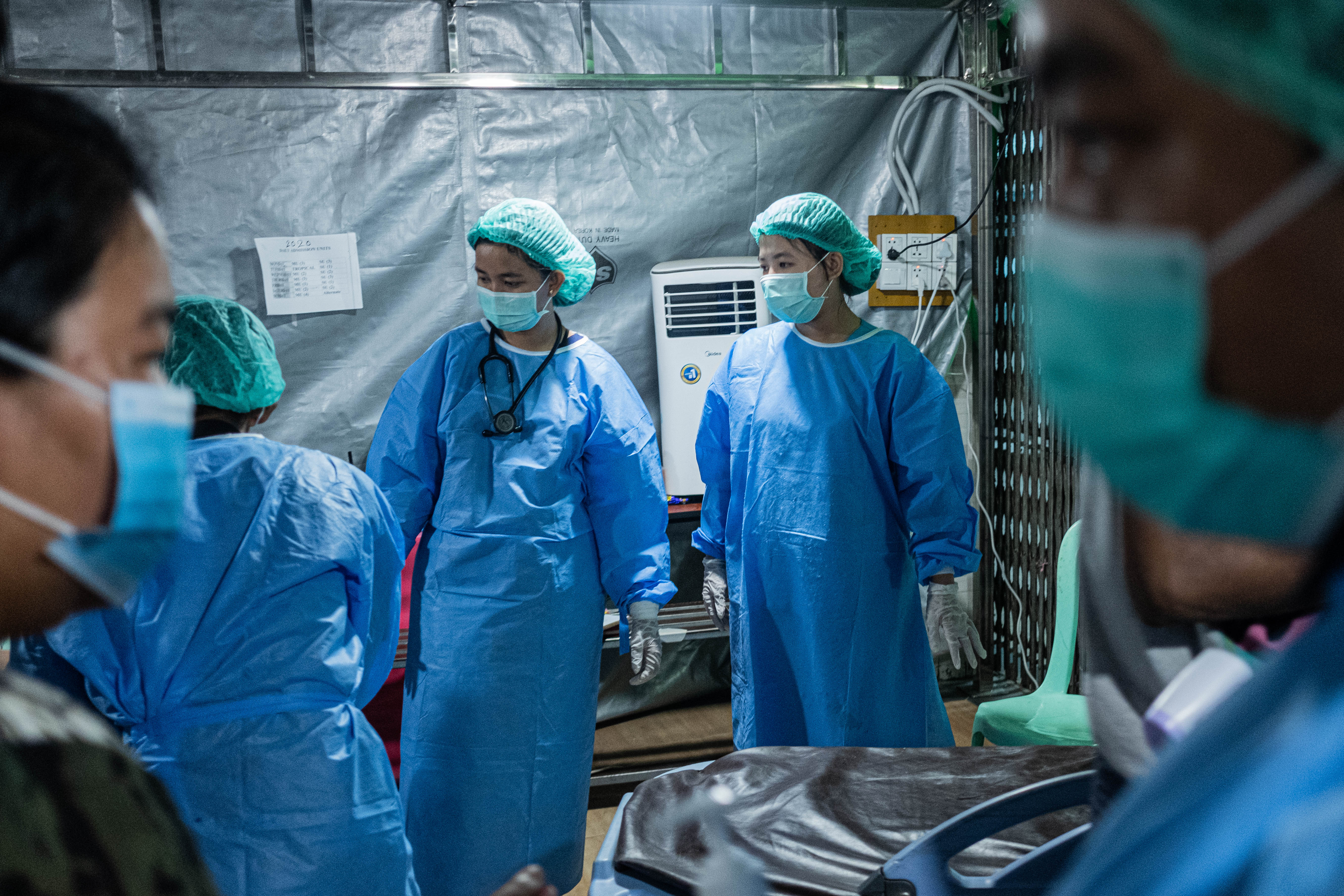
On a recent visit to Yangon General Hospital, a team of medical workers – gloved and masked, with surgical gowns draped over their scrubs – dashed about the emergency room checking new patients for symptoms of Covid-19. Two standing fans and a five-foot air-cooler were unable to keep them from sweating.
With Myanmar’s testing capacity still limited, these staff cannot get checked for the virus unless they display specific symptoms or have had contact with positive cases.
While confirmed cases in Yangon are treated at Wai Bar Gi Infectious Diseases Hospital or South Okkalapa Hospital, emergency room staff throughout the city will have to provide initial treatment for infected but unconfirmed patients who show up there.
Yangon General Hospital’s emergency department was repurposed to receive Covid-19 patients in early April. It has made changes to emergency department protocol, including first checking every new patient for symptoms of the disease, but all emergency rooms could potentially treat unconfirmed cases.
Emergency staff have little choice but to show up to work without knowing who might be carrying the invisible virus, but knowing their work puts them at an exceptionally high risk of infection.
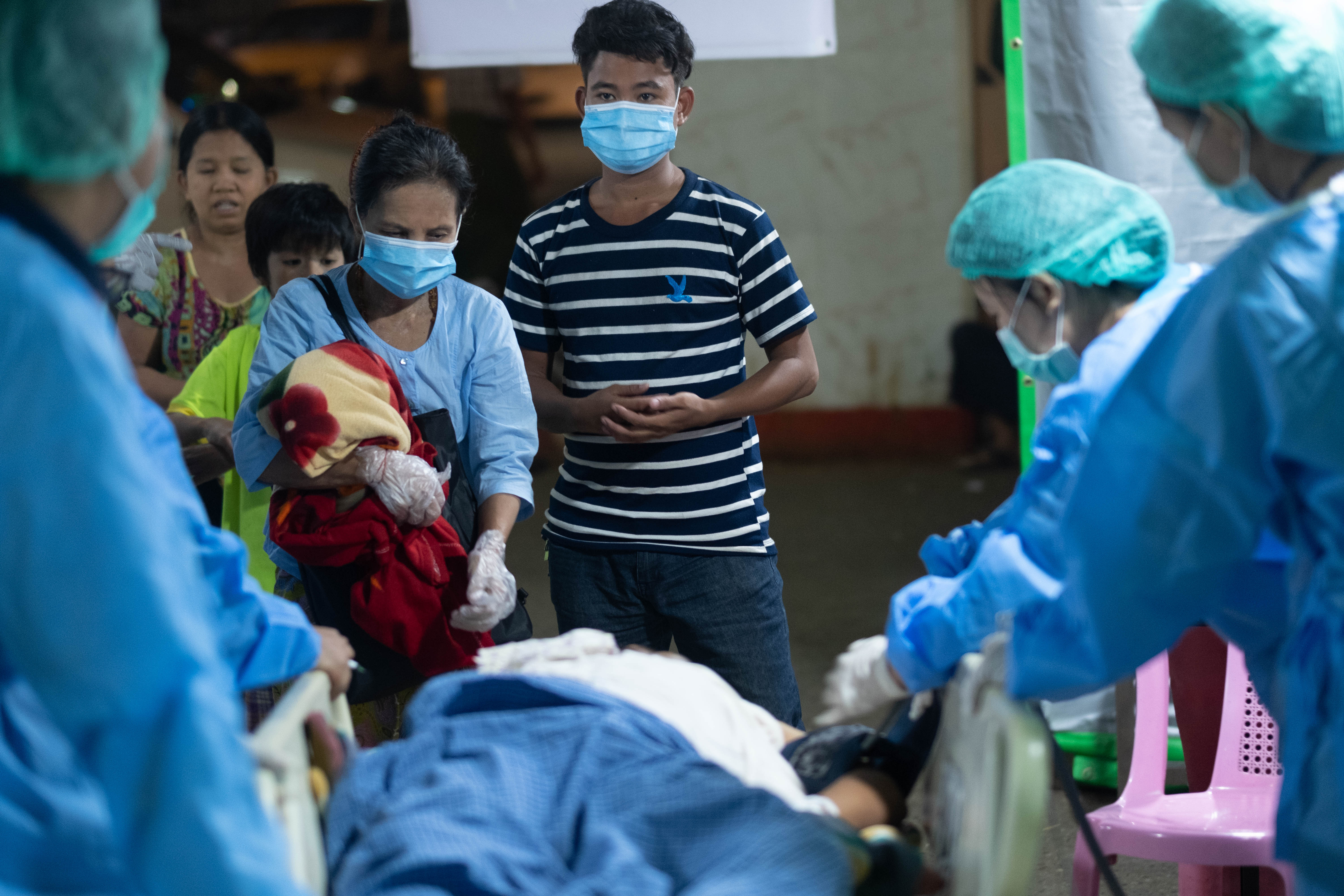
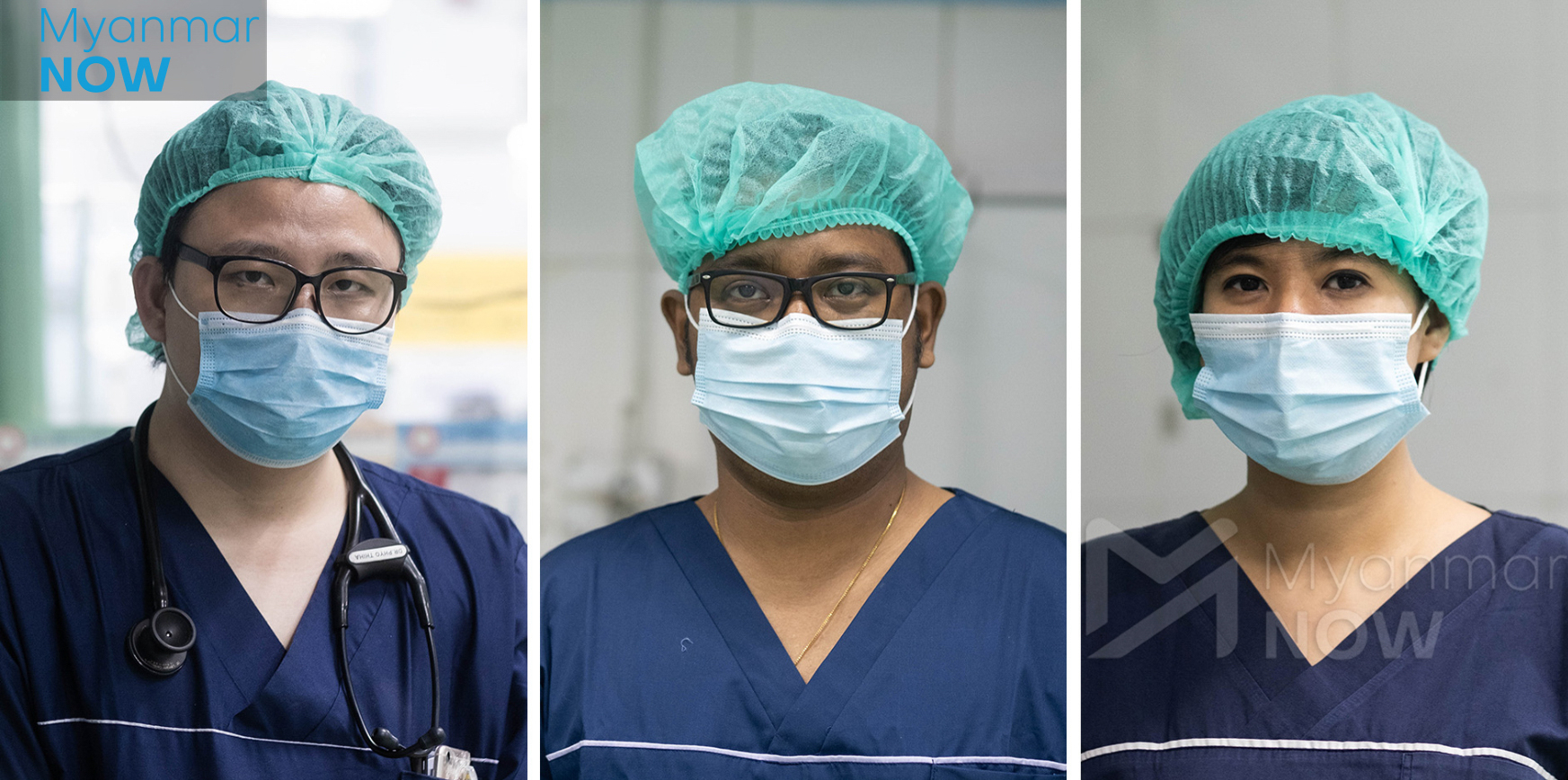
Dr Myo Hein, 33, an emergency physician at Yangon General Hospital, hasn’t been home since late March, when a patient at his hospital tested positive. “It’s been stressful,” he said.
Colleagues of his who were in close contact with the patient were quarantined at Wai Bar Gi Hospital. They finished their quarantine during Thingyan after showing no symptoms.
The elderly are the most vulnerable to the disease, and Myo Hein’s parents – who he usually lives with – are in their 70s.
He’s kept his promise to call his mother twice a day, though he often hears her crying on the other end of the line.
“Whenever I miss her call, she thinks I’ve been sent to Wai Bar Gi Hospital for quarantine,” he told Myanmar Now.
“She always wanted me to become a doctor, but now she almost regrets I am one.”
‘He wants to be close to me’
At least 24 emergency physicians at the same hospital have likewise gone without seeing their families or homes.
Yangon General Hospital has repurposed empty apartments within a ten-minute walk from the main facility into temporary staff housing.
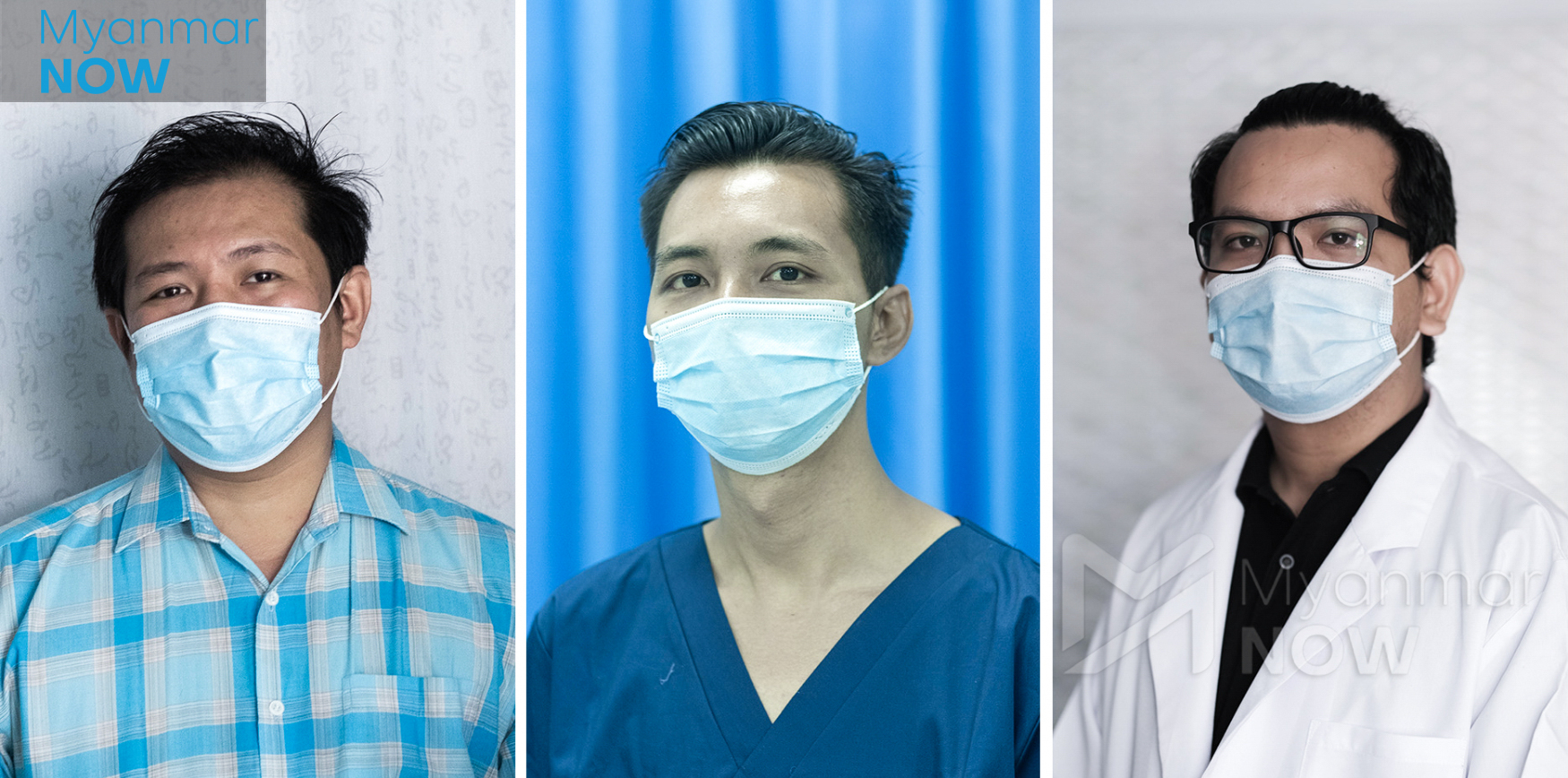
Dr Phyo Thiha, a 30-year-old emergency doctor, has also not been home since late March. He is distancing himself from his parents and two younger sisters.
An assistant lecturer at the Yangon University of Medicine 1, he’s also put his academic career on hold and closed his private clinic to minimize the risk of infecting others.
“I told my family I’ll be home when it all ends,” he said. “I don’t want to be a carrier if I unknowingly get infected.”
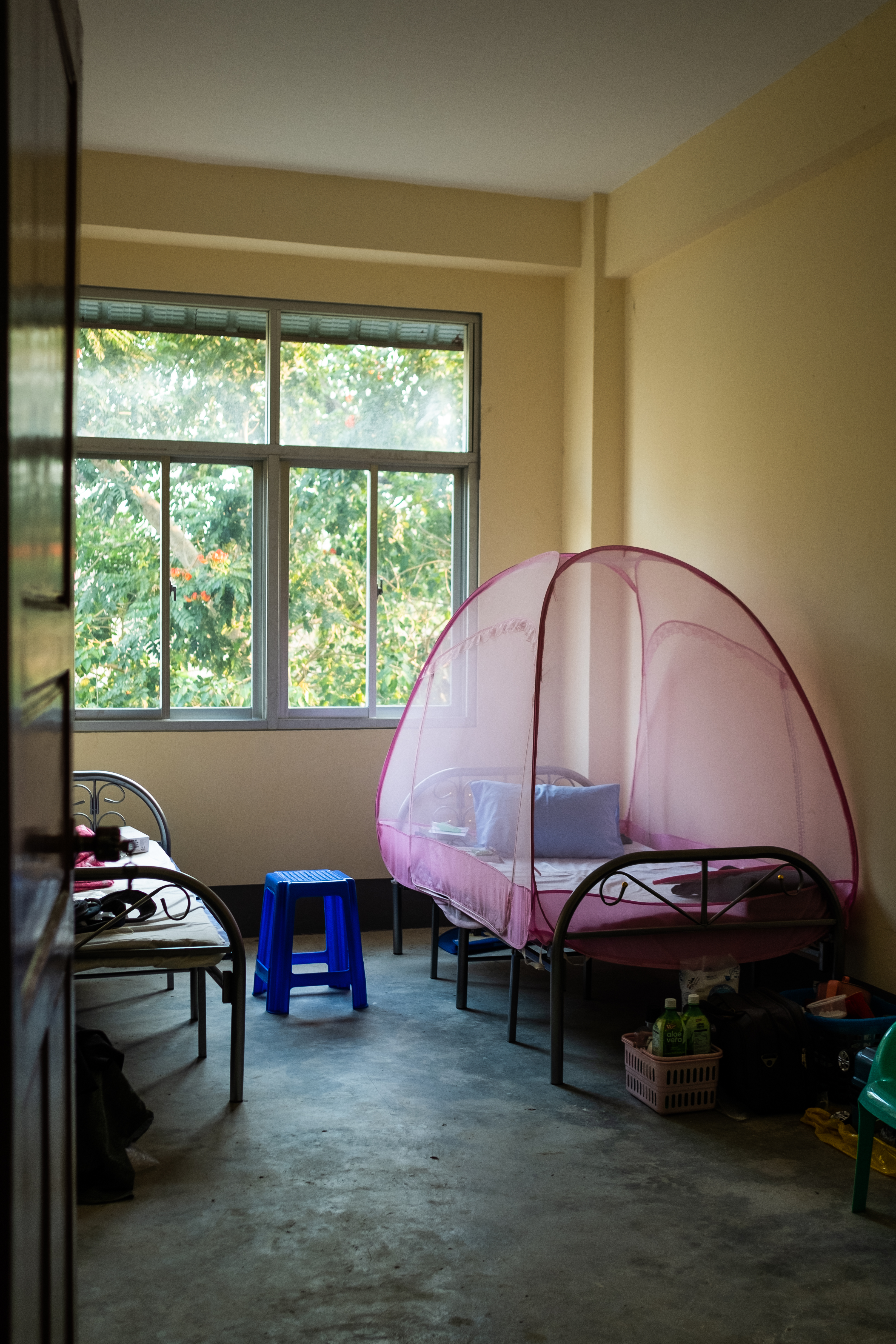
Likewise for North Okkalapa Hospital emergency physician Dr Ye Lin Hein, 30, who has closed and moved into his private clinic with the two stray cats he adopted years ago. He hasn’t seen his parents since March.
Other emergency healthcare workers are unable to leave home but must still try to isolate themselves as best as possible.
Dr Zaw Thiha, a 30-year-old North Okkalapa Hospital emergency doctor, is also trying to keep physically distant from his family while still remaining at home. If cases continue to increase, he said, he will move out too.
He lives with his wife, her parents and his four-year-old son.
He stays in a separate room with its own bathroom. His son can only approach the threshold of the door. They must speak at a room’s distance apart.
“We were not physically that close before, but now he really wants to be close to me,” Zaw Thiha said. “I told him I have the Zombie virus so he can’t come any closer.”
Ignoring government orders
Adding to medical workers’ fears is the sight of people still gathering in large groups outside.
The government has temporarily closed factories, mandated stay-at-home policies in virus hotspots and banned gatherings of more than four people, but doctors say too many people are still not taking these orders seriously.
Ye Lin Hein said he sees large crowds gathering in the streets and markets on his drive home from work every day.
While he understands some people can’t afford to stay home, he said many seem oblivious to the risk of spreading the disease.
“Many people here have a false sense of security,” he said. “The idea that ‘it won’t happen to me’ is really dangerous.”
He wishes authorities would implement stricter stay-at-home measures and implement a more forceful public awareness campaign – particularly in the impoverished and densely-populated outskirts of Yangon, where he fears asymptomatic carriers could be unknowingly spreading the disease.
While Yangon General Hospital has seen a slight drop from its average 3,000-3,500 weekly emergency room visits since the national stay home directive was issued, emergency doctors are still regularly receiving hundreds of patients injured while obviously defying stay-at-home orders.
“People are still outside fighting, drinking, getting into motorcycle accidents and car accidents, stabbing people,” Myo Hein said. “These things should not be happening right now.”
Scarce resources
Myanmar confirmed its first two Covid-19 cases on March 23 and in just one month that number has grown to 150, with 116 of them in Yangon – nearly 10 of which were first admitted to Yangon General Hospital.
Nationwide, six have died and 16 have recovered.
Despite new protocols, Yangon’s public healthcare workers – operating in an underfunded system with inadequate resources – fear they’ll soon experience a crisis like those seen in more developed countries.
As of March 20, Myanmar had a total of 249 ventilators and 383 ICU beds, according to an appraisal by the World Bank.
But doctors fear it won’t be enough if cases keep rising in the coming weeks.
“Our country won’t be able to cope,” said Myo Hein.
It wasn’t until watching the world’s most advanced healthcare systems crumble in the face of Covid-19 that Khaing Thitsar, a 33-year-old emergency physician at Yangon General Hospital, realized how grave it could become.
“I’ve studied medicine my whole life but have never experienced a pandemic,” she said. “It was difficult to process. What will we do when it happens here?”
The doctors Myanmar Now spoke with remember Myanmar’s H1N1 outbreak in 2017. Back then, unlike now, there were readily available vaccines and rapid test kits for H1N1, and only a few dozen cases reported.
What worries Phyo Thiha most is the risk of more emergency healthcare workers getting infected, at a time when the country needs them more than ever.
Zaw Thiha said that North Okkalapa Hospital has enough protective equipment – much of it donated by the public – to last another two months, but if cases continue to climb they’ll soon run out.
“We’ll have to work with whatever we have,” he said. “If we run out, we still have to work.”
Health minister Myint Htwe said in an April 26 statement that, if current government measures are followed until mid-May, he’s confident the virus can be controlled.
Yangon General Hospital currently has 34 ventilators and the ability to treat up to 40 patients displaying Covid-19 symptoms a day before having to transfer them to one of the two designated hospitals, according to Dr Maw Maw Oo, head of the hospital’s emergency department.
On April 20 the World Bank announced a $50m emergency loan to help Myanmar treat and respond to the Covid-19 crisis.
According to bank documents, $48.5m of that will go to hospital preparedness, including refurbishing ICU facilities and adding beds, ventilators and other essential equipment.
The money would add 338 ICU beds to the country’s total, nearly doubling its existing capacity and adding at least six ICU beds to each state and region, the bank said.
It also noted that donations to Myanmar of hundreds of thousands of test kits are “in the pipeline,” coming from foreign governments and international organisations including Singapore, China, Japan and the UN.
“We need medical resources and manpower to deal with this,” said Khaing Thitsar.
“I am not afraid of catching the virus,” she said. “What scares me is not being able to do anything to treat a patient in front of me.”
Editing by Joshua Carroll and Danny Fenster