Years from now, March 17, 2021, will be remembered as the day that Myanmar’s brief era of press freedom—however partial and imperfect it was—well and truly died.
As of this day, the country no longer has a single independent newspaper in publication. On Wednesday, The Standard Time (San Taw Chain) joined The Myanmar Times, The Voice, 7Day News and Eleven in suspending operations in the wake of last month’s military coup.
It was less than a decade ago that the quasi-civilian administration of former President Thein Sein began slowly lifting restrictions on Myanmar’s long-suppressed press.
As overt censorship became a thing of the past and new licenses were issued, the number of news outlets proliferated, in the surest sign of confidence in ongoing political and economic reforms.
Now only online news media remain as the last lifeline for millions of citizens desperate for reliable sources of information amid the military-induced freefall.
With this in mind, the new regime is acting to sever this last connection as it moves to plunge the country into darkness.
“The situation for press freedom is only going to get worse as they cut off the internet,” says political analyst Sithu Aung Myint, before adding: “The country no longer has democracy or an ounce of freedom.”
Piling pressure on news media
It took 10 days for the regime’s Ministry of Information to start making Orwellian demands. On February 11, it issued new instructions to the Myanmar Press Council, “urging” news media to “practice ethics” and stop referring to the “State Administration Council” as a junta.
Citing provisions in Myanmar’s military-drafted constitution, the junta’s arbiters of truth claimed that the regime came to power by legitimate means because a state of emergency had been duly declared.
Newspapers, journals, and websites that persisted in using language that suggested otherwise were not merely wrong, but were also violating media ethics and inciting unrest, the ministry insisted.
Eleven days later, on February22, the coup maker himself, Senior General Min Aung Hlaing, warned the media that their publishing licenses would be revoked if they continued to use words that didn’t meet with his approval.
But on February 25, in a show of defiance, some 50 news outlets declared their intention to keep reporting on the situation as it unfolded, and to describe the regime and its actions as they saw fit.
The arrests begin
Two days later, the junta began targeting the most vulnerable and essential participants in the whole news-making process: reporters.
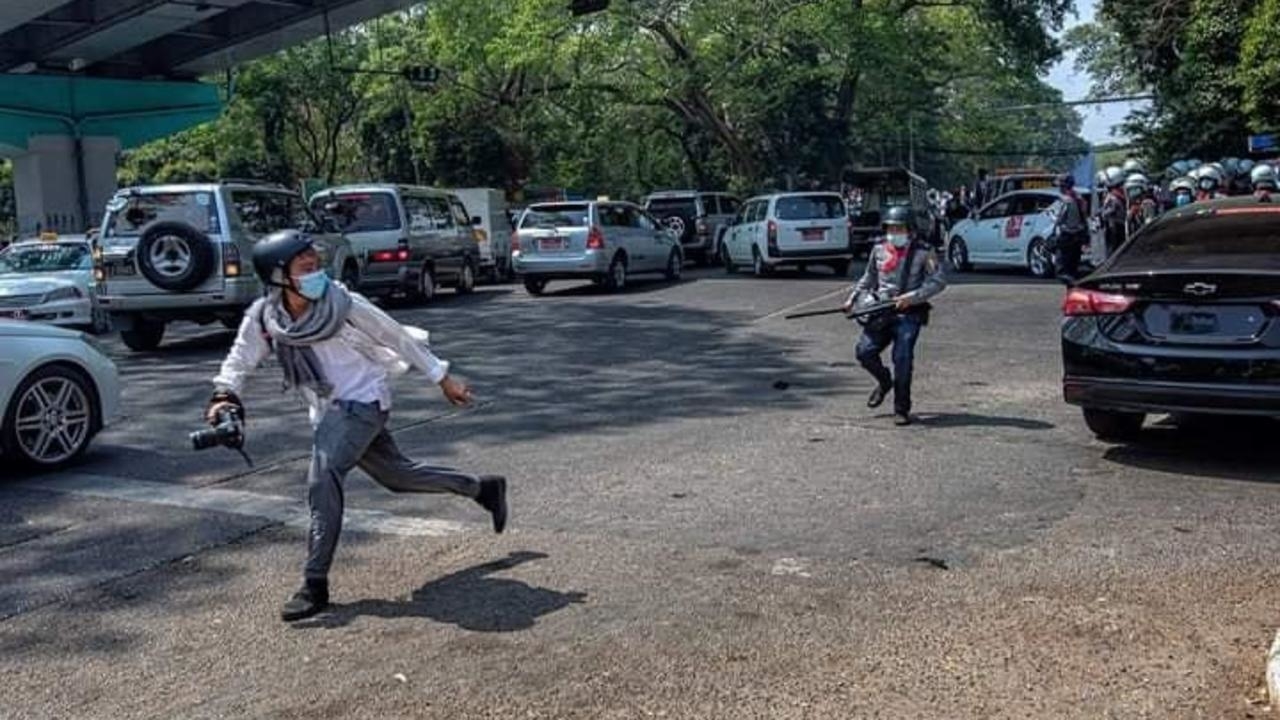
On February 27, five journalists covering the junta’s crackdowns on anti-dictatorship activities were arrested and later charged with incitement under section 505a of the Penal Code.
Myanmar Now’s multimedia reporter Kay Zon Nway was one of those arrested that day. She was doing her job of documenting the brutal assault on protesters in Yangon’s Sanchaung township when she was apprehended while fleeing the regime’s forces as they lashed out at everyone in sight.
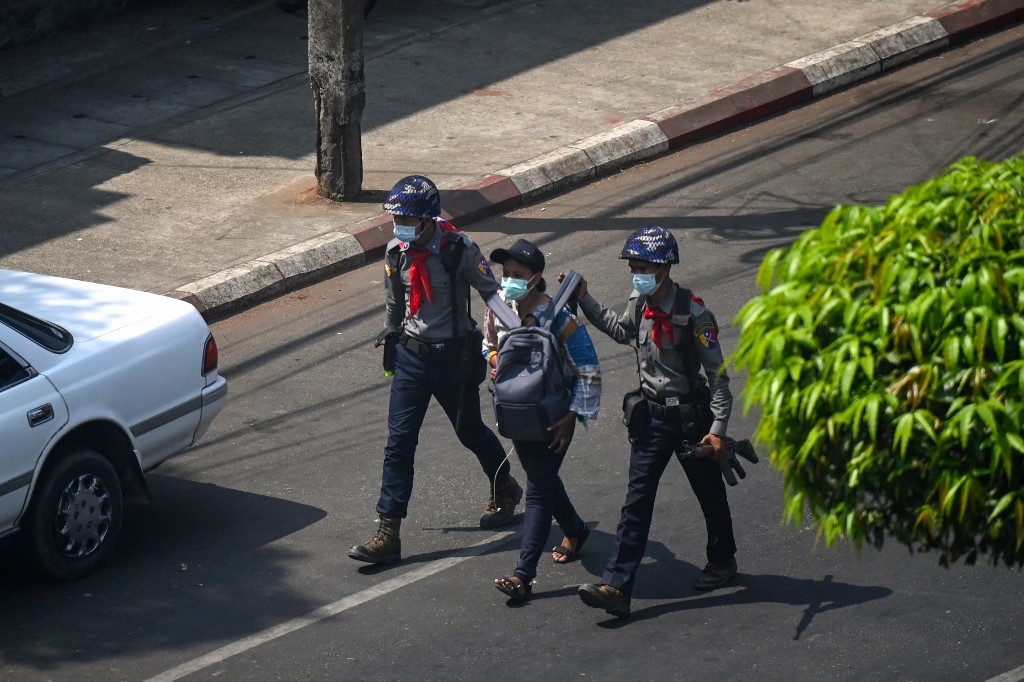
The four others—Aung Ye Ko from 7Days News, Ye Myo Khant from Myanmar Pressphoto Agency, Thein Zaw from AP, and Hein Pyae Zaw from ZeeKwat Media—were reporting near Hledan when they were taken into custody.
All five are now in Yangon’s notorious Insein prison awaiting trial on charges based on the ludicrous notion that they were somehow responsible for the mayhem that they were merely there to witness, at great risk to their own lives.
Under recent amendments to section 505a, they now face up to three years in prison for the crime of sharing what they saw with their fellow citizens.
According to data compiled by the Assistance Association for Political Prisoners and last updated on March 8, as many as 33 journalists have been arrested or targeted for arrest since the February 1 coup.
Taking action against news organizations
The regime hasn’t just put individual journalists in its sights; as its efforts to end resistance to its rule continue to escalate, it has also moved to neutralize entire new organizations.
On March 8, the Ministry of Information announced that it had revoked the publishing licenses of Myanmar Now and four other outlets—7Day News, Mizzima, DVB and Khit Thit media.
7Days News stopped printing the following day, and a day later, Eleven announced that it would also be suspending its operations, at least until April 18.
By that time, two other well-known local publications, The Myanmar Times and The Voice, had already shut down shop for various reasons.
That left only The Standard Time, which for the past week has been the only print newspaper in the country not controlled by the regime. And now it, too, is gone.
All of this is just another chapter in Myanmar’s long and often troubled news media history.
After Myanmar gained independence in 1948, private daily newspapers flourished in the country. Published in Myanmar, English, Chinese and Hindi, these publications were part of a vibrant culture that cherished the free exchange of ideas and information.
But that came to an abrupt end in 1962, when the former dictator General Ne Win seized power and put most daily newspapers under government control. After his 1973 constitution was ratified, privately owned dailies were effectively banned.
It wasn’t until nearly 40 years later, in late 2012, that the state-owned media’s monopoly on daily news ended under the Thein Sein government.
Now this fleeting moment of relative freedom is past, and Myanmar has returned to the dark days of an uprising that was brutally crushed, ushering in an even darker era of absolute military rule.
“I wasn’t a journalist in ‘88, but in my 12 years in this profession, this current situation is the worst. It’s not just a matter of being afraid to go out to report; now you can be arrested just for being a person in media,” one female reporter who asked to remain anonymous remarked.
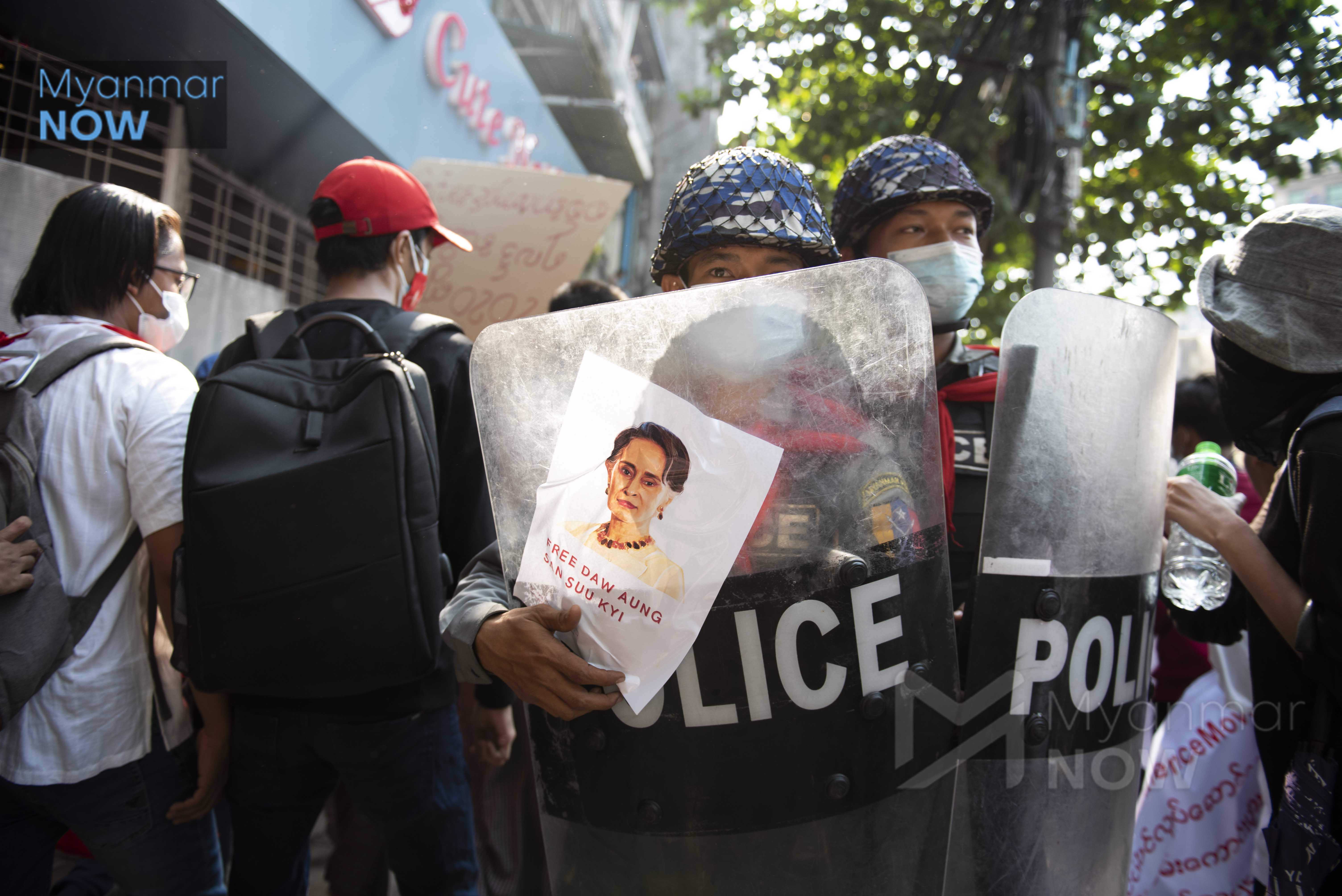
As trying as these times are, however, they have more than proven the true value of press freedom as a weapon in the fight against oppression.
“Help the news media so that the local and international community know the people’s bravery, sacrifices, and the atrocities that the dictators have committed,” Sithu Aung Myint, the political analyst, wrote on social media recently.
“Take record of incidents yourself,” he added, reminding his readers that in this age of citizen journalists, we all have a responsibility to act as witnesses.
But even with so much courage and commitment on full display, it’s difficult not to see this day as a chilling sign of things to come.
Reflecting on what the loss of Myanmar’s last news publication means for the country, Sithu Aung Myint concluded: “As a nation without newspapers, we are now in the dark ages.”