For some the nightmare has returned, but for ethnic people the nightmare never stopped

But just as our nightmare did not start with the coup, neither did our struggle.

Published on Mar 13, 2021
Nationwide protests against the coup have been responded with murders, torture and mass arrests by the military regime. (Myanmar Now)

When the military seized power on February 1, arresting elected National League for Democracy (NLD) leaders including State Counsellor Aung San Suu Kyi and President Win Myint, the current nightmare started.  

The people of Myanmar already know what life is like under a military regime: No rule of law. No right to speak or to move freely. A poor education system and a lack of healthcare. Social problems, economic stagnation, and a loss of livelihoods. No human rights.

But for ethnic nationalities there is also an added dimension: fear.

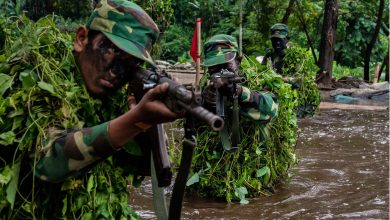
While the media focus has largely been on the protests against the coup in Myanmar’s major cities, there has been little attention paid to the uniquely challenging plight of the country’s ethnic and indigenous peoples, who make up at least 30 percent of the population. There has been little coverage of military operations now occurring in ethnic territories. 

There is no recognition that for us, this nightmare never stopped.

Before the coup, in December 2020, fighting was already escalating between the Myanmar military and the Karen National Union’s (KNU) armed wing, the Karen National Liberation Army (KNLA) in Karen State’s Mutraw District, known as Hpapun in Burmese, and in Ler Doh (Kyaukkyi) Township in Bago Region. 

An estimated 5,000 villagers fled their homes, becoming internally displaced people (IDPs), scattered throughout the forests, forced to survive without schools, medicine or adequate shelter. 

The fighting extended to Kawkareik Township, Karen State, following the coup. The Myanmar military launched mortars into villages and farmland, disrupting people’s lives and livelihoods, giving them no choice but to run and hide in the jungle. They know from experience that if they are caught by Myanmar soldiers, they will be forced to be porters, or even shot and killed. 

An additional 2,000 people were displaced by the post-coup clashes, bringing the total number of IDPs to around 7,000 at the time of writing. Fighting continues still, with people terrorised daily. 

While the 2015 Nationwide Ceasefire Agreement (NCA), signed by a minority of ethnic armed organisations, appeared to initially reduce episodes of armed conflict in southeastern Myanmar, it did not necessarily reduce conflict, nor did it create security or stability for ethnic communities in conflict areas. Following the NCA, clashes and military atrocities actually increased in Kachin, northern Shan, and Rakhine states. 

For this, the NLD consistently provided the military with political cover. 

When the NLD came to power after the 2015 general election, the domination of ethnic people long practised by the military continued in different ways. Pressures to “develop” increased, as we were informed of projects planned for our lands ranging from monocrop plantations to mining ventures to hydropower dams. 

We were not consulted about these plans and we did not give consent. Our customary land laws were ignored, ethnic armed organisations’ land policies disregarded, and our calls for peace and federalism denigrated. Our voices were never listened to. The projects mostly went ahead anyway. 

The NLD continued what the Thein Sein government started in 2012, with the passing of the Farmland Law and the Vacant, Fallow and Virgin Land Management Law. These statutes affirmed that all land in Myanmar was the property of the state, in accordance with the military-drafted 2008 Constitution. Land confiscation by the government and private companies became legalised. Land grabbing and natural resource extraction increased in ethnic areas that were subject to decades of brutal offensives by the military. Legal mechanisms created to deal with complaints were inept and ineffective. 

There was no any political will to address the plight of ethnic people who suffered in the name of the NLD’s vision for “development.” 


Under the NLD, legal reforms--such as 2018 amendments to the aforementioned laws, and the introduction of a new Forest Law--were used to further cut indigenous people off from their ancestral lands. Our customary lands were categorised as “vacant,” as though we did not exist, and were subsequently handed out to private companies or local officials to control and exploit as they wished. 

Customary land tenure and rights, integral to our survival, have never been protected under Myanmar law. Though the 2016 National Land Use Policy outlined an intent to do so, it was not legally binding. This created tensions between indigenous communities, investors, and the Union government, which, in turn, has led to increased food insecurity, poverty, and political instability. 

The position that ethnic and indigenous people have been in for the last five years--caught between the military’s guns and the NLD’s repressive laws--cannot be described as freedom. 

Seven decades of military domination have left a deep, unmistakable trauma across ethnic communities. The familiar pattern of forced portering, extrajudicial killings, military attacks, arrests of local leaders, and the destruction of property continues, even as scores of courageous people in Myanmar’s urban areas risk their lives to protest the regime. 

There are multiple reports detailing the imprisonment of the NLD’s leadership, and the persecution of party members on the ground. But the constant fear we live with largely continues to go unnoticed and unreported. While some Burmese people are now acknowledging the long-standing suffering of ethnic and indigenous communities, many are still ignorant that this reality exists in their own country. 

We have endured war, authoritarianism, exploitation, chauvinism. But just as our nightmare did not start with the coup, neither did our struggle. Our fight is for national equality, democracy, federalism, self-determination, and the right to live in peace without fear. 

The General Strike Committee of Nationalities (GSCN), a leading voice in the Civil Disobedience Movement, has defined objectives that we should all be able to embrace: release political detainees, abolish the dictatorship, abolish the 2008 Constitution, and build a federal democratic union based on equality and the right to self-determination.

It breaks my heart to see the people of our country gunned down while demonstrating against the military coup. These youth hold no weapons, only hope for a better future. 

It is my hope that the Burmese people will understand why we do not want to go back to living under a system designed by the 2008 Constitution, or under a government controlled by the NLD. At this critical moment, I ask you to stand together with ethnic nationalities in shared compassion, committed to respecting us all as equals.


Esther Wah is an indigenous Karen woman. She works with ethnic communities across Myanmar on their right to protect the land and forests.

The offensives come in the wake of deadly crackdowns against anti-coup protesters in Myitkyina 

Published on Mar 18, 2021
A KIA soldier watches from an outpost in Kachin state in this undated file photo (Kachinwave) 

The Kachin Independence Army (KIA) launched attacks against police bases in the jade mining region of Hpakant on Thursday morning, a local resident told Myanmar Now. 

The attacks targeted police battalions where soldiers were stationed near Nam Maw village in the Seik Muu village tract.

“There are Myanmar police battalions around Nam Maw,” a resident said. At least three bases were attacked, he added. 

A 41-year-old civilian in Seik Muu village injured his left hand during the clash, the Kachin-based Myitkyina News Journal reported.

The KIA has launched several offensives against the coup regime’s forces recently. Fighting has also been reported in Mogaung and Injangyang this month. 

Some 200 people fled the Injangyang villages of Gway Htaung and Tan Baung Yan on Monday after the KIA launched an offensive against the military there. 

The offenses began in the wake of deadly crackdowns against anti-coup protesters in Myitkyina. The KIA has warned the junta not to harm anti-coup protesters. 


Myanmar Now is an independent news service providing free, accurate and unbiased news to the people of Myanmar in Burmese and English.

Continue Reading

The coup regime’s forces took the injured people away and locals do not know their whereabouts 

Published on Mar 18, 2021
Kalay residents move the body of a man who was shot dead on Wednesday (Supplied) 

Four young men were killed and five people were injured in the town of Kalay in Sagaing region on Wednesday as protesters continued their fight to topple the regime despite daily massacres across the country aimed at terrorizing them into submission. 

The Tahan Protest Group gathered in the town at around 10am and police and soldiers began shooting. One young man was shot dead on the spot as he tried to help people who were trapped amid gunfire, residents told Myanmar Now.   

The regime’s forces also shot at and chased fleeing protesters along roads and through narrow alleys, a resident said.

“The crowd of protesters dispersed but one person was shot dead while trying to rescue those trapped in the protest site,” the resident added. 

As the crowd dispersed, a man riding a motorcycle was shot outside a branch of KBZ Bank. “He also died,” the resident said. 

Despite the murders, protesters gathered again in the afternoon around 4pm. Police and soldiers started shooting again and killed two people. 

“They were shot dead while trying to set up barricades at the protest site. They were shot while trying to obstruct the army’s way as the army troops chased and shot the trapped protestors,” the resident said. 

The two who were killed in the morning were identified as Salai Kyong Lian Kye O, who was 25, and Kyin Khant Man, who was 27 and had three children. The identities of the other two have not yet been confirmed.

Five people were also injured and then taken away. Locals said they did not know where they had been taken.   


Myanmar Now is an independent news service providing free, accurate and unbiased news to the people of Myanmar in Burmese and English.

Continue Reading

An ex-convict businessman says that he gave the State Counsellor more than $550,000 in cash when ‘there was no one around.’ 

Published on Mar 18, 2021
Maung Weik (first from left) is pictured near State Counsellor Aung San Suu Kyi at the opening ceremony of a government housing built by his Say Paing Company. (Maung Weik/ Facebook)

The military council announced on March 17 that it would attempt to charge State Counsellor Daw Aung San Suu Kyi, who has been detained since Myanmar’s February 1 coup, with corruption.

The junta’s move is linked to new allegations against Aung San Suu Kyi by businessman Maung Weik. The owner of the Say Paing construction and development company, Maung Weik was formerly imprisoned on drug charges and is known to have close relationships with members of the military’s inner circle.  

Military-run media aired a recorded statement made by Maung Weik alleging that he had given Aung San Suu Kyi more than US$550,000 in cash-filled envelopes on the four occasions he met her between 2018 and 2020. 

“There was no one around when I gave her the money,” he said in the video statement. 

Under Myanmar’s earlier military regime, Maung Weik maintained ties to several generals, including former intelligence chief Khin Nyunt.

He was sentenced to 15 years in prison on drug charges in 2008, but was released in 2014 while the country was led by the military-backed Union Solidarity and Development Party.  

Upon his release, Maung Weik founded Say Paing–a construction company–and ran various business ventures through his connections to military officials.  

Maung Weik’s wife is also the niece of military-appointed Vice President Myint Swe, who was also the former chief minister of Yangon under the former military administration. 

The coup council announced on March 11 that the now-ousted National League for Democracy’s (NLD) Yangon Region chief minister Phyo Min Thein had given Aung San Suu Kyi $600,000 and more than 11 kilograms of gold. The announcement provided no reason as to why the money and gold were allegedly given to the State Counsellor by the chief minister. 

A top NLD figure told Myanmar Now that the funds in question were donations to build a pagoda. 

“They’re trying to fabricate this and ruin [Aung San Suu Kyi’s] reputation, but the public already clearly knows it’s not true. There’s no need to say anything else,” the official said. 

The junta has also accused the Daw Khin Kyi Foundation and an affiliated project, the La Yaung Taw Academy, of losing public funds. The foundation was founded by Aung San Suu Kyi and named after her late mother. 

According to the military council, the land lease for the Daw Khin Kyi Foundation’s headquarters, located on Yangon’s University Avenue, is not commensurate with the market price for land in the area. It argues that the country had lost more than 1 billion kyat (more than $700,000) in public funds as a result.

The junta declared that from 2013 to 2021, more than $7.9 million in donations from foreign NGOs, INGOs, companies and individual international donors flowed into the foundation’s three foreign currency accounts.

Also under investigation by the junta is the La Yaung Taw Academy in Naypyitaw, which trains young people in environmental conservation and horticulture in association with the Daw Khin Kyi Foundation. The military said the rate at which the land for the project was purchased came at a discount of at least 18 billion kyat (more than $12.7 million), which was subsequently a loss to the state. 

It also reportedly included some plans—such as the construction of a museum—that used funds in a way that strayed from the project’s, and the Daw Khin Kyi Foundation’s, original aims.

“The construction of a building with finance from the foundation for the chair of the foundation has deviated from the foundation’s objective,” the March 17 announcement in the military-run newspaper said. 

Prior to the corruption allegations, the military council had hit Aung San Suu Kyi with four charges at the Zabuthiri Township court in Naypyitaw.

She has been accused of violating Section 505(b) of the Penal Code for incitement, which carries a sentence of two years in prison; Article 67 of the communications law for possession of unauthorized items; an import-export charge for owning walkie-talkie devices; and a charge under the Natural Disaster Management Law for not following Covid-19 measures during the 2020 election campaign period.

The military council has not allowed Aung San Suu Kyi to meet with her legal team. 

“I’ll most likely see her via video conferencing on March 24 for the next hearing,” lawyer Min Min Soe told Myanmar Now. 

The military council has only allowed lawyers Yu Ya Chit and Min Min Soe to take on Aung San Suu Kyi’s case, ignoring the requests of more established legal experts, including Khin Maung Zaw and Kyi Win, to be granted power of attorney.


Myanmar Now is an independent news service providing free, accurate and unbiased news to the people of Myanmar in Burmese and English.

Continue Reading